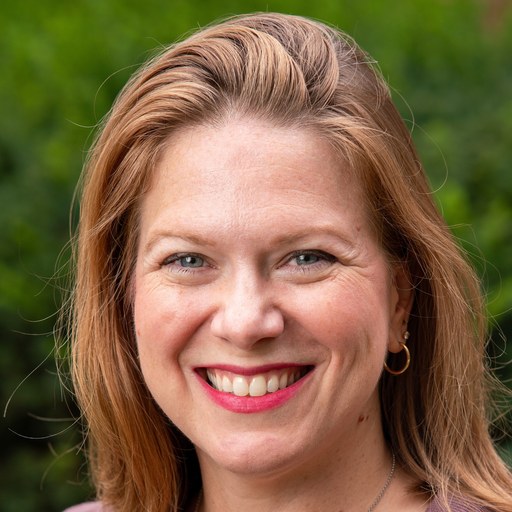
Elizabeth Tipton
Professor of Statistics and Data Science
Northwestern University
Faculty Fellow, Institute for Policy Research
I develop methods for designing studies and for building evidence that decision-makers can use.
Recently
- Apr 2026 What schools want vs. what evidence can deliver — PIER seminar, Harvard Graduate School of Education.
- 2025 Elected to the National Academy of Education.
- 2025 Designing Small Evaluation Studies, with Larry Hedges — Sage.
Social Statistics
A field with no department
My research sits at the intersection of the social sciences and statistics. The interest is long-standing: in college I majored in math but minored in sociology and English. Looking to combine them, I started a PhD in Sociology after college, thinking I wanted to be a quantitative social scientist. After a couple of years I realised that wasn't quite right, and after a few more years working, I realised what I wanted was the inverse — a social statistician. Someone who develops and studies the methods that make social science research possible.
Unlike biostatistics, in the United States, there are no social statistics departments. The community is real but fragmented, and the path in is rarely obvious to anyone standing outside it. What follows is what I wish someone had told me. If you know of something that belongs here, tell me and I'll add it.
Where the community is
- ASA Social Statistics Section, American Statistical Association A good community — statisticians working in sociology, economics, psychology, public policy, education, public health, public opinion research, and beyond. I chaired it in 2025.
- Blog Statistical Modeling, Causal Inference, and Social Science Andrew Gelman's blog, now over twenty years old. It was one of the first places I found this community at all.
- Journals Examples of where the methods work lands Journal of Educational and Behavioral Statistics · Psychological Methods · Sociological Methods and Research · Journal of Business and Economic Statistics · Advances in Methods and Practices in Psychological Science
How people get here
There is no single route into Social Statistics. One option is to get a PhD in Statistics / Data Science / Computer Science, and to find mentorship and collaborations with social scientists. Another option is to get a PhD in a discipline in a program focused on methods - e.g., in education, there are programs in Quantitative Methods in Education, or Research Methods, Measurement, Evaluation, and Statistics under various names.
Yet another option is to get a PhD in a discipline - e.g., psychology, political science - and pick up an M.S. in Statistics (or take substantial coursework in the field). For example, at Northwestern, some social science PhD students pick up an MS in Applied Statistics through the Ad Hoc degree program. Other universities have equivalents, though you should check before you count on it.
Elizabeth Stuart maintains a spreadsheet of graduate programs in social statistics, which is the most complete list I know of.
Where people end up
Social statisticians are scattered by construction. Some are in Statistics departments; others in social science departments, schools of education, policy schools, biostatistics departments, and public health programs. Many work in the federal statistical system. Others are in industry.
What people work on
The topics vary, but the recurring ones are methods for causal inference, network analysis, survey sampling, and experimental design. Nested, spatial, and network data structures come up constantly. Data privacy is a live concern throughout.
My own corner of this is the design side — methods for building studies, and for building evidence someone can act on. More on that here →
I'm happy to hear from people considering this path. tipton@northwestern.edu